
A bad smell coming from your sink is hard to ignore. It can show up in the kitchen, the bathroom, or the laundry room, and it usually gets worse when you run the water.
The good news is that most sink odors have simple causes. In many cases, you can fix the problem yourself in under an hour, without calling a plumber.
This guide explains why your sink smells, how to fix each cause, and how to stop the smell from coming back.
Quick Answer: Why Does a Sink Smell?
Most sink smells come from one of these causes:
- A dry P-trap that lets sewer gas rise into the room
- Food, grease, soap, or hair stuck in the trap or drain
- A dirty strainer or drain grid
- Grime inside the overflow opening
- A venting problem in the drain system
- A blockage further down the drain line
Let’s look at each one.
1. A Dry P-Trap
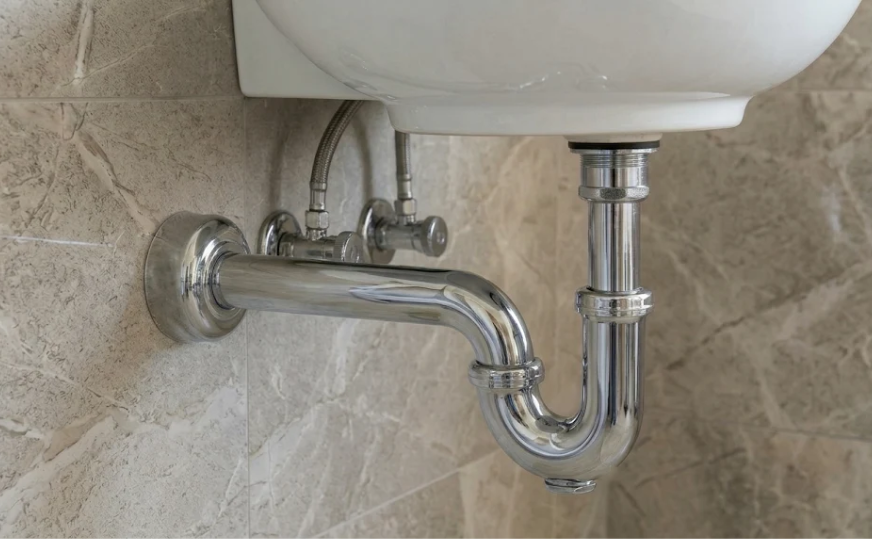
The P-trap is the curved pipe under your sink. It holds a small amount of water, and that water works as a seal. It stops sewer gas from rising back up through the drain.
If a sink is rarely used, such as in a guest bathroom or a basement laundry sink, the water in the trap can slowly dry up. Once the seal is gone, sewer gas can come into the room.
How to fix it: Run water in the sink for 15 to 30 seconds. This refills the trap and restores the seal. If the sink is rarely used, run the water once a week.
2. Buildup Inside the P-Trap or Drain
Hair, soap scum, grease, and small food particles collect in the bottom of the trap over time. As this buildup breaks down, it creates a sour or rotten smell.
This is one of the most common causes in kitchen sinks, where grease and food waste go down the drain every day.
How to fix it: Clean the trap. We explain how in the step-by-step section below.
3. A Dirty Strainer or Drain Grid
Sometimes the smell starts right at the top. Food, soap, and hair can stick to the drain grid or strainer, and the damp buildup starts to smell. Because it sits at the surface, you notice the odor every time you use the sink.
How to fix it: Remove the strainer or grid if it comes out easily. Scrub it with warm water, dish soap, and an old toothbrush. Wipe the visible part of the drain opening as well.
4. Grime in the Overflow Opening
Many bathroom sinks have an overflow opening near the top of the basin. It gives water an extra path to drain if the sink fills up. This channel is easy to forget, and soap and residue can build up inside it. That buildup can cause a musty smell, even when the main drain is clean.
How to fix it: Pour a mix of warm water and a little dish soap into the overflow opening. Use a small bottle brush to scrub as far as you can reach, then rinse with clean water.
5. A Venting Problem
Your drain system needs air to work properly. If a vent is blocked or poorly installed, drains can gurgle and sewer gas can escape through the trap seal.
Signs of a venting problem include slow drains, gurgling sounds, and smells that keep returning after cleaning.
How to fix it: Venting problems are usually not a DIY job. If you notice these signs, call a licensed plumber.
6. A Blockage Further Down the Drain Line
If several fixtures smell at the same time, the problem may be deeper in your drain line or sewer line. Cleaning the sink will not solve it.
How to fix it: Contact a licensed plumber to inspect the line.
How to Get Rid of Sink Odor: Step by Step
Try these steps in order, starting with the easiest.
Step 1: Run the water. Let the water run for 15 to 30 seconds to refill the P-trap.
Step 2: Clean the strainer or grid. Remove it, scrub it, and rinse it well.
Step 3: Flush the drain. Pour hot (not boiling) water down the drain. Boiling water is not recommended, especially for plastic pipes. For light buildup, you can also try baking soda followed by vinegar, then rinse with hot tap water after a few minutes.
Step 4: Clean the P-trap.
- Place a bucket under the trap to catch water.
- Loosen the slip nuts on both ends of the trap by hand or with pliers.
- Remove the trap and empty it into the bucket.
- Clean out any hair, grease, or debris.
- Reassemble the trap and tighten the nuts.
- Run water and check for leaks.
If your trap has a cleanout plug, this job is much easier. You only need to place a bucket under the plug and unscrew it to clear the blockage. You do not have to take the whole trap apart.
Step 5: Clean the overflow. Use the warm soapy water method from cause number 4.
Choosing the Right Parts for a Smell-Free Sink
Sometimes cleaning is not enough. If parts under your sink are old, worn, or hard to clean, replacing them can make future maintenance much easier.
A P-trap with a cleanout plug. The cast iron P-trap with cleanout plug and box flange fits standard 1-1/2″ sink drains and can be used with kitchen, laundry, and bathroom sinks. The cleanout plug at the bottom lets you clear buildup without taking the trap apart. The kit includes the coupling nuts and washers, and the box flange covers the wall opening neatly. It comes with a 4 year warranty.
A grid strainer with overflow. The lavatory grid strainer with overflow is a solid brass replacement for worn bathroom sink drains. The grid has 0.24″ holes that let water pass quickly while helping keep larger debris out of the drain. It includes a 6″ tailpiece and has 1-1/2″ x 16 UN threading, with a one year limited warranty.
Before ordering any part, measure your drain opening and check the thread size and trap size so the new part fits your sink. You can also browse our full range of commercial P-traps and drains.
How to Prevent Sink Smells
- Run water in rarely used sinks at least once a week.
- Clean strainers and drain grids regularly.
- Keep grease, coffee grounds, and food scraps out of the kitchen drain.
- Clean the overflow opening every few months.
- Flush the drain with hot water now and then.
When to Call a Plumber
Call a licensed plumber if:
- The smell comes back soon after cleaning
- Several drains in your home smell at once
- Drains gurgle or drain slowly in more than one place
- You see leaks, water damage, or mold under the sink
Safety note: If you smell natural gas (often described as a rotten-egg smell) and not just drain odor, leave the area and contact your gas utility or emergency services right away.
Frequently Asked Questions
Why does my sink smell like rotten eggs?
This is often caused by food or organic buildup in the drain or P-trap, or by a dry trap letting sewer gas through. Clean the trap and strainer first. If the smell continues, call a plumber.
Why does my bathroom sink smell only sometimes?
An occasional smell often points to a dry P-trap or buildup in the overflow opening. Running the water and cleaning the overflow usually helps.
Can a P-trap cause a bad smell?
Yes. A P-trap that has dried out, or one that is full of debris, can cause odors. A working trap holds water that blocks sewer gas.
How often should I clean my P-trap?
There is no fixed schedule. Clean it when you notice slow draining or odor. A cleanout plug makes routine cleaning quicker.
Is it safe to pour bleach or chemical cleaners down the drain?
Read the product label carefully and never mix cleaning chemicals. Many plumbers recommend starting with manual cleaning and hot water instead.
Final Thoughts
A smelly sink is annoying, but the cause is usually easy to find. Start with the simple fixes: run the water, clean the strainer, flush the drain, and clean the P-trap. If the smell still comes back, or if several fixtures are affected, bring in a licensed plumber.
Need help choosing the right part for your sink? Contact our support team and we will help you check the size and fit.