
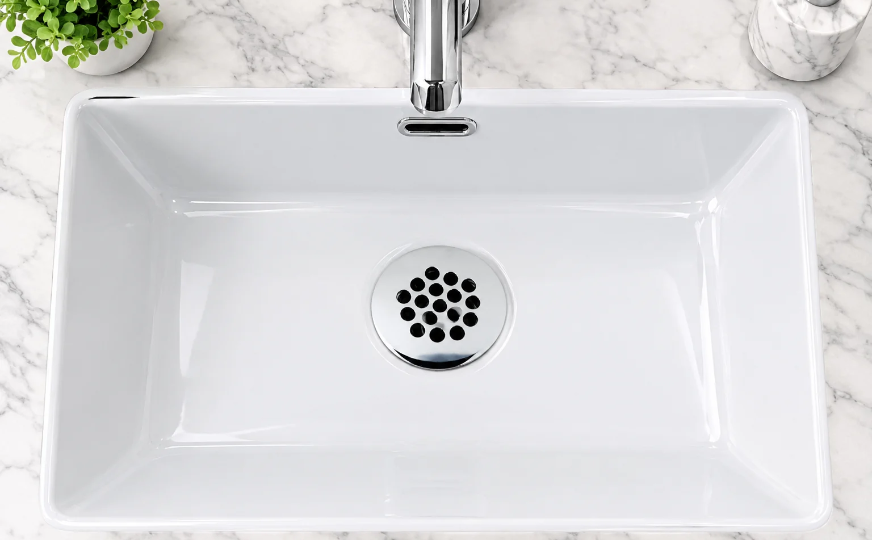
If you have ever noticed a small hole or slot near the top of a bathroom sink basin, you have seen the overflow. Most people never think about it until a sink fills up, starts to smell, or needs a new drain.
So, what is a sink overflow? It is a built-in safety path that lets water drain away if the basin fills higher than normal, so it does not spill over the rim.
This guide explains how a sink overflow works, why it matters, and what to check when you replace your drain.
Quick Answer: What Is a Sink Overflow?
- It is an opening near the top of the basin, usually a small hole or slot.
- It connects to the drain below through a hidden channel.
- When the water level rises to that opening, the water flows out through it instead of over the rim.
- It works as a backup, not as a replacement for a working drain.
How Does a Sink Overflow Work?
The overflow is simple, and it has no moving parts.
- The basin fills. This can happen if the drain is blocked or slow, or if a faucet is left running.
- Water reaches the overflow opening. The opening sits near the rim, below the top edge of the basin.
- Water enters the overflow channel. The channel runs inside the sink wall and joins the drain below the basin.
- Water leaves through the drain. It travels down the drain with the rest of the water, so it does not spill onto the counter or floor.
In many sinks, the channel can also let air in while water drains, which helps water flow out smoothly.
What Are the Parts of a Sink Overflow?
- Overflow opening: the visible hole or slot near the top of the basin
- Overflow channel: the hidden passage behind the basin wall
- Drain with overflow path: the drain body or strainer that the channel connects to
- Tailpiece: the pipe below the drain that carries water to the trap
For the overflow to work, the sink and the drain both need to be built for it. This is why matching the right drain matters when you replace one.
Why Does a Sink Overflow Matter?
- Helps prevent water damage. It gives water an extra place to go if the basin fills.
- Supports smoother draining. Many sinks use the channel to help air move as water drains.
- Adds a safety margin. It can buy you time if the drain is blocked or the faucet is left on.
What an Overflow Cannot Do
An overflow is helpful, but it has limits:
- It may not keep up if water is coming in faster than it can leave.
- It will not fix a blocked drain.
- It will not help if the drain below is fully clogged, because the overflow joins the same drain.
If your sink fills often, the drain needs cleaning or repair.
How to Tell If Your Sink Has an Overflow
- Look near the top of the basin for a small hole or slot.
- Check the inside of the rim, as some are hidden under the lip.
- Look under the sink for a drain design that has a side connection to the basin.
Some sinks do not have an overflow at all, so check before you buy a drain.
Sink Drain With Overflow vs Without
| With overflow | Without overflow | |
|---|---|---|
| Works with | Sinks that have an overflow opening | Sinks with no overflow opening |
| Extra water path | Yes | No |
| Best use | Most standard bathroom basins | Sinks built without an overflow |
Important: Match the drain to your sink. A drain with overflow is meant for a sink that has an overflow opening, and a drain without overflow is meant for one that does not. If you are not sure, check your sink details or contact the seller before ordering.
Common Sink Overflow Problems
1. A musty or sour smell
Soap, residue, and moisture can build up inside the overflow channel. This can cause an odor even when the main drain is clean. See our guide on why your sink smells for causes and fixes.
2. Slow draining
A blocked drain slows the overflow too, since both use the same path.
3. Leaks around the drain
A worn or poorly fitted drain can leak at the connection between the strainer and the basin.
How to Clean a Sink Overflow
- Pour warm water mixed with a little dish soap into the overflow opening.
- Use a small bottle brush to scrub as far in as you can reach.
- Rinse with clean water.
- Repeat every few months, or when you notice a smell.
How to Choose a Replacement Sink Drain With Overflow
Before you buy, check these:
- Overflow: Make sure the drain is made for a sink with an overflow.
- Thread size: Check the threading on your existing drain.
- Tailpiece length and diameter: Make sure the tailpiece suits your plumbing.
- Material: Solid brass is a strong choice for daily use.
- Finish: Match it to your faucet and other fixtures.
- Style: A grid strainer is designed to let water through the grid and catch debris. If you want to fill the basin and hold water, a stopper-style drain is the usual choice.
Our Pick: ALUIDS Lavatory Grid Strainer With Overflow
If your old drain is worn, damaged, or leaking, the ALUIDS lavatory grid strainer with overflow is a simple replacement for sinks and basins.
Why it works for this job
- Built-in overflow gives water an extra path to drain when the basin fills
- Multi-hole grid lets water flow through quickly and helps keep larger debris out of the drain
- Solid brass construction for daily use
- Chrome plated finish for a clean, bright look that suits most bathroom setups
- 6″ tailpiece included, so you can connect it to your drain setup right away
- One year limited warranty
Specifications
- Material: brass, chrome plated
- With overflow: yes
- Grid hole diameter: 0.24″
- Grid top diameter: 2.3″
- Strainer body height: 2.6″
- Overall height: 6.9″
- Tailpiece length: 6″
- Tailpiece outer diameter: 1.3″
- Tailpiece wall thickness: 0.04″
- Threading: 1-1/2″ x 16 UN
- Threaded section length: 0.4″
This listing is for the chrome plated version. Before ordering, measure your sink’s drain opening and check the thread size to make sure both match. You can also view the line drawing and specification sheet on the product page.
Pair it with a cast iron P-trap that has a cleanout plug for easier maintenance under the sink. Browse our commercial P-traps and drains to complete the setup.
Frequently Asked Questions
What is a sink overflow?
It is an opening near the top of the basin that connects to the drain below. It gives water a backup path if the basin fills too high.
Where is the sink overflow located?
Usually near the top of the basin, as a small hole or slot, sometimes hidden under the rim.
Do all sinks have an overflow?
No. Some sinks are made without one, so check before buying a drain.
Does the overflow stop a sink from flooding?
It helps in many cases, but it has limits. It may not keep up with water coming in very fast, and it cannot work if the drain below is fully blocked.
Why does my sink overflow smell?
Soap and residue can build up inside the channel. Cleaning it with warm soapy water and a small brush usually helps.
Can I use a drain with overflow on a sink without one?
Match the drain to your sink. If you are not sure, check your sink details or contact the seller first.
What do I need to check before replacing a drain?
Check the overflow, thread size, tailpiece length and diameter, material, and finish.
Final Thoughts
A sink overflow is a small feature with a useful job. It gives water an extra way out, supports smoother draining, and adds a safety margin. When you replace your drain, match the overflow, check the thread size, and choose a durable material.
Need help checking the fit? Contact our support team and we will help you choose the right drain for your sink.